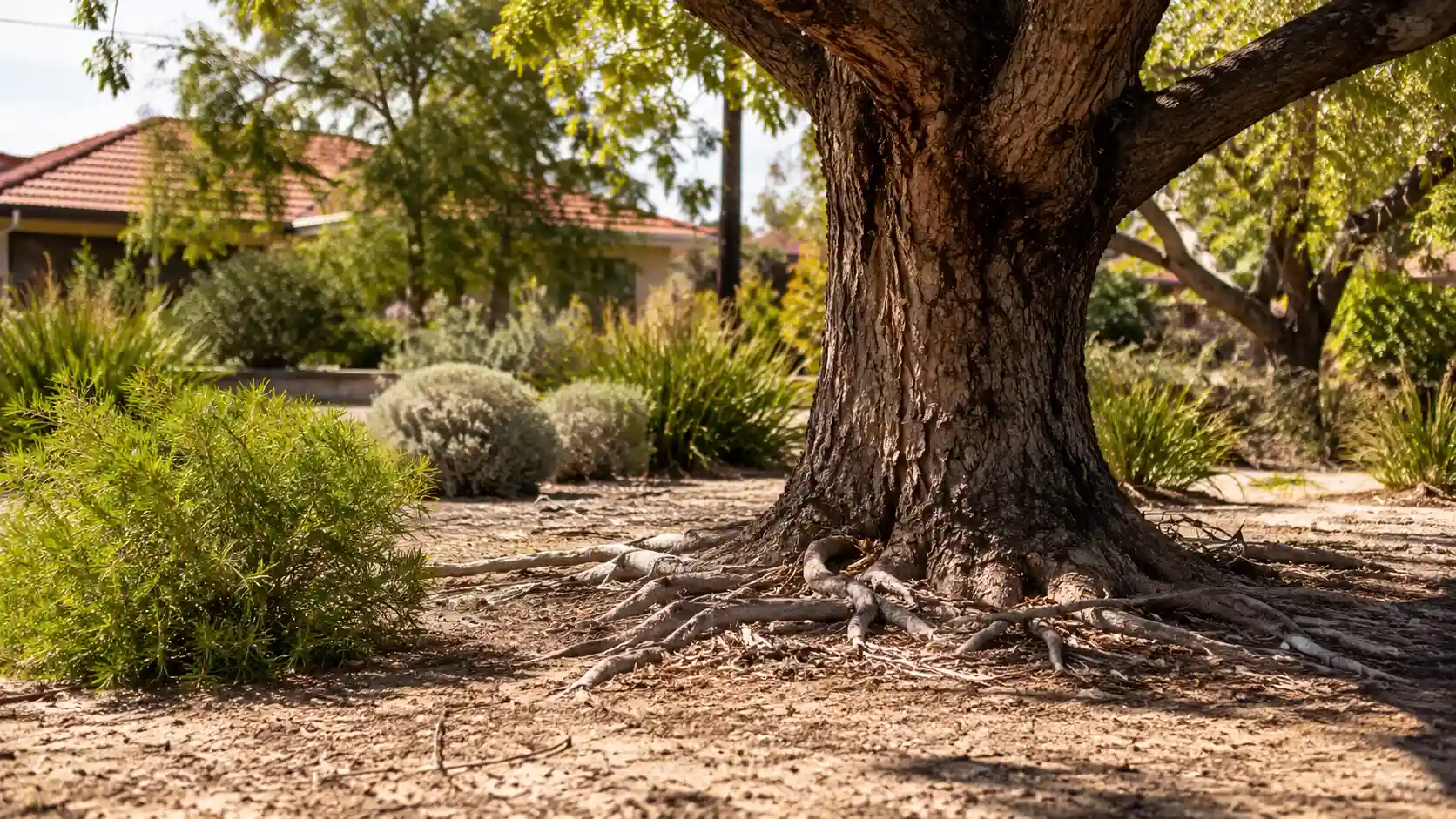
Early Signs of Termite Infestation in Perth Trees and What to Do
Perth's warm climate is ideal for outdoor living, but it's also ideal for termites. Over 1 in 4 homes in Western Australia will face a termite infestation at some point, and trees are often where the problem starts. A colony can quietly hollow out a tree for years before any damage becomes obvious, meaning by the time you notice something's wrong, the infestation may already be well-established. Knowing what to look for early can save you thousands.
Perth's warm climate is ideal for outdoor living, but it's also ideal for termites. Over 1 in 4 homes in Western Australia will face a termite infestation at some point, and trees are often where the problem starts. A colony can quietly hollow out a tree for years before any damage becomes obvious, meaning by the time you notice something's wrong, the infestation may already be well-established. Knowing what to look for early can save you thousands.
Key Takeaways
Over 1 in 4 WA homes will face a termite infestation, with Coptotermes acinaciformis responsible for more than 70% of serious building damage (termite.com.au).
Trees are a primary nesting site - spotting signs early can prevent spread to your home.
Key warning signs include mud tubes, hollow sounds, crown dieback, exit holes, and swarming termites.
Never disturb an active colony - call a licensed arborist or pest specialist immediately.
Termite damage to structures costs Australians around $1.5 billion annually and is not covered by home insurance.
Why Are Perth Trees So Vulnerable to Termites?
Coptotermes acinaciformis, the most destructive subterranean termite in Australia, is responsible for over 70% of serious building damage in WA (termite.com.au). Perth's sandy soils, warm temperatures, and high density of eucalyptus and other timber-rich trees create ideal foraging conditions. Colonies build underground nests that extend up to 100 metres in radius, with trees acting as both food sources and nesting sites.
Unlike termites in cooler climates that slow down in winter, Perth's mild winters mean termite activity can persist year-round. Climate shifts are extending active periods further, which is why early detection matters more than ever for Perth homeowners.
According to Abipest, suburban areas including Joondalup, Rockingham, Mandurah, and the broader Perth metro have seen a surge in termite activity over the past decade, with repair costs per infestation ranging from $7,000 to $30,000.
7 Early Signs of Termite Infestation in Your Trees
Spotting a termite problem early can mean the difference between a managed removal and a full structural crisis. Here are the seven signs every Perth homeowner should know.
1. Mud Tubes on the Trunk or Roots
Termites build thin, pencil-width tunnels made of soil, saliva, and faecal matter to travel between their nest and food source while staying protected from the sun. If you spot these running up the base of a tree or along exposed roots, it is one of the clearest indicators of active subterranean termite activity.
2. Hollow or Papery Sound When Tapping
Knock on the trunk at various heights. Healthy timber produces a solid thud; termite-damaged wood sounds hollow or papery because the colony eats from the inside out, leaving only a thin outer shell. This is often the earliest detectable sign before any visible external damage appears.
3. Crown Dieback or Unexplained Leaf Loss
When termites destroy the internal structure of a tree, nutrients and water can no longer move efficiently through the trunk. This shows up as thinning foliage, dead branches in the upper canopy, or patches of yellowing leaves - particularly during spring and summer when healthy Perth trees should be at their most vigorous.
4. Visible Exit Holes or Galleries in Bark
Small round holes in the bark or sections of bark that crumble away easily can indicate termite galleries underneath. These galleries are the tunnels through which termites travel and feed. In advanced infestations, peeling back loose bark may reveal a network of chambers.
5. Frass (Termite Droppings)
Drywood termites push their pellet-shaped droppings out of the nest, leaving small piles of dark, powdery material at the base of the tree or on nearby ground. While subterranean termites are more common in Perth, mixed species activity does occur, especially in older, established gardens.
6. Swarming Termites
On warm, humid evenings - typically from spring through to autumn - reproductive termites (alates) leave the colony in a swarm to establish new nests. Finding discarded wings near a tree base or around your garden is a serious warning sign that a large, mature colony is nearby. Do not ignore it.
7. Structural Softness at the Base
If you press a screwdriver or sharp implement into the tree base and it sinks in with little resistance, the wood has likely been compromised internally. This level of damage suggests the infestation has been active for some time and the tree may be structurally unsound.
What Should You Do If You Suspect Termites in a Tree?
The most important rule: do not disturb an active termite colony. Disturbing termites causes them to scatter deeper into the tree or spread to adjacent timber, including your home's structure. Termite specialists strongly advise against disturbing an active colony
Step 1 - Document what you can see
Take clear photos of mud tubes, exit holes, frass, or any visible damage. Note how many trees are affected and their proximity to your home or other timber structures.
Step 2 - Call a licensed professional
Contact a licensed pest management technician for a formal termite inspection. For trees specifically, an arborist with experience in termite-affected trees can assess structural safety and advise on removal or treatment options.
Step 3 - Get a structural assessment of the tree
A termite-damaged tree can become a falling hazard, especially in Perth's summer storm season. An arborist will assess whether the tree can be saved with treatment or whether removal is the safer option.
Step 4 - Check surrounding trees and structures
A colony in one tree can extend its foraging range up to 100 metres. Have any adjacent trees, timber fences, garden beds with railway sleepers, and your home's subfloor inspected at the same time.
Step 5 - Address the colony, not just the tree
Removing the tree without treating the nest simply displaces the colony. Your pest specialist should treat the underground nest directly, often using baiting systems or chemical barriers, before or in conjunction with any arborist work.
Our observation: In Perth gardens, termite activity in a tree often goes unnoticed until a neighbour's property or the home's subfloor is already affected. The most at-risk trees are those within 5 metres of a structure - particularly older eucalyptus, paperbarks, and any large tree with surface roots near a foundation or slab edge.
When Does a Termite-Damaged Tree Need to Be Removed?
Not every termite-affected tree needs to come down immediately. Removal depends on how much structural integrity remains, proximity to your home and powerlines, and whether effective treatment is still viable. However, a tree that sounds completely hollow when tapped, shows significant crown dieback, or has extensive bark and basal damage is generally considered a falling risk and should be removed by a qualified arborist.
Perth homeowners should also be aware that termite-damaged trees near the property boundary can be a liability issue. If a structurally compromised tree falls and damages a neighbour's property or injures someone, you may be responsible. Getting an arborist's written assessment provides documentation that you acted responsibly.
If removal is recommended, our tree removal Perth service covers the full job safely - from ground crew to stump grinding, so no termite harbourage is left behind.
How Can Perth Homeowners Reduce Termite Risk Around Trees?
Prevention is far cheaper than treatment. Termites are drawn to moisture, soil-to-timber contact, and undisturbed wood. A few practical habits make a real difference:
Keep mulch at least 150mm away from tree bases and house foundations.
Remove dead stumps promptly, they are one of the most common termite entry points in Perth gardens.
Fix leaking taps, irrigation lines, or drainage issues near tree root zones.
Avoid stacking firewood against fences, walls, or tree trunks.
Have trees professionally inspected every 12-18 months if you are in a high-risk suburb (Joondalup, Rockingham, Mandurah, inner metro areas).
Consider a chemical soil barrier around your home perimeter if you have large established trees nearby.
Not Sure If Your Tree Has Termites? Get a Professional Assessment
If you've spotted any of these warning signs or just want peace of mind before summer storm season, it's worth having a qualified arborist take a look. Lumberjacks WA provides professional tree assessments across Perth, including advice on termite-affected trees and safe removal where needed.
Get in touch via our contact page or call us on 0481 114 103 to book an assessment.
Frequently Asked Questions
Can termites in a tree spread to my house?
Yes. Coptotermes acinaciformis colonies can extend foraging tunnels up to 100 metres from their nest. A tree within 10-20 metres of your home is a genuine risk pathway. Have the colony treated by a licensed pest specialist and the tree assessed by an arborist as soon as possible.
How do I know if a tree is hollow from termites or just naturally hollow?
Natural hollows usually show weathered, aged edges and no mud tube residue. Termite hollowing tends to have a papery or brittle feel when you press the wood, and you'll often find mud tubes or frass nearby. When in doubt, tap the trunk at different heights. Termite damage often produces a distinctly hollow, drum-like sound.
Does home insurance cover termite damage to trees?
No. Home insurance policies in Australia generally exclude termite damage from both buildings and trees. This makes early detection and professional treatment critical because the cost of prevention is far lower than uninsured repair bills.
Should I remove a tree with termites before treating the colony?
Not without professional advice. Removing the tree without treating the underground nest can displace the colony rather than eliminate it. They may simply find a new food source, which could be your home. A pest specialist and arborist should coordinate to treat the colony first or simultaneously with any tree removal.
Which Perth suburbs have the highest termite risk?
The Perth metro areas with higher recorded termite activity include Joondalup, Rockingham, Mandurah, and inner suburban areas with older housing stock and large established trees. However, termite risk exists across all of Greater Perth because of the climate, soil conditions, and availability of timber food sources.